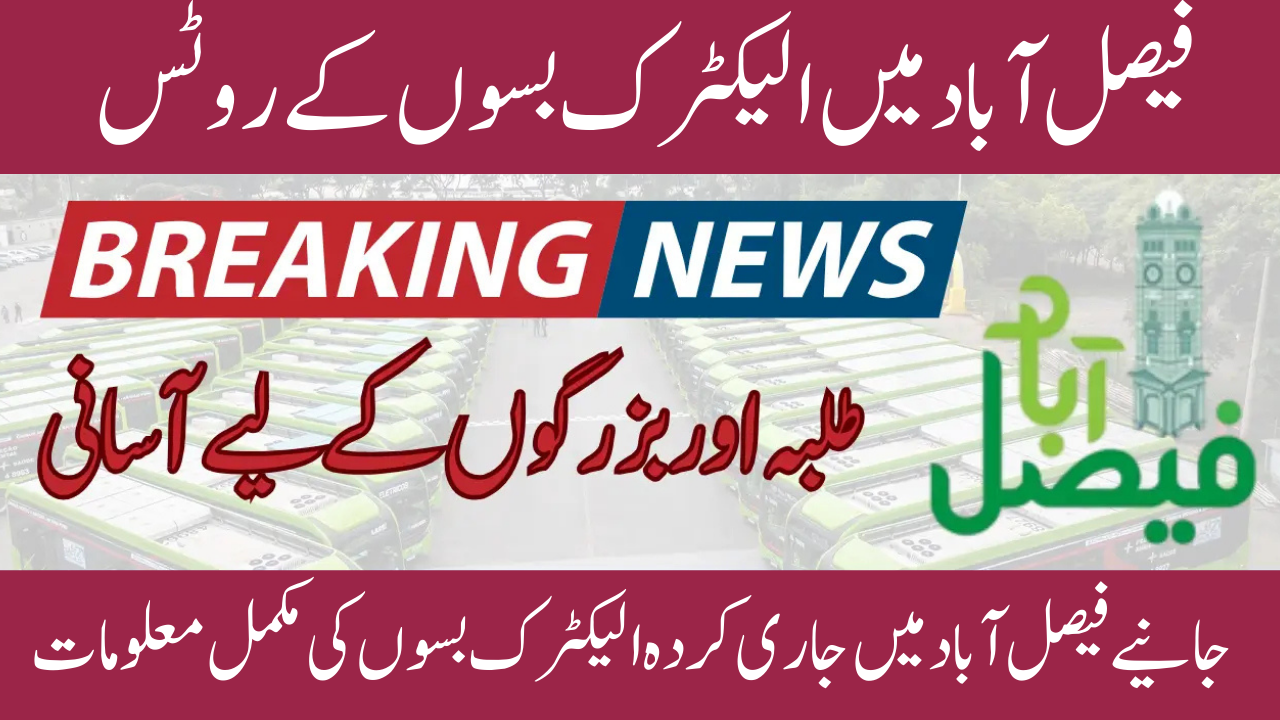
Electric Bus Route in Faisalabad 2025
Faisalabad, Pakistan’s industrial hub, is entering a new era of public transport with the arrival of 30 modern electric buses. This project is part of the Punjab Green Initiative, aimed at reducing pollution, improving urban mobility, and offering commuters a comfortable, eco-friendly transport option.
In this guide, you’ll find everything about the electric bus project in Faisalabad, including routes, depots, features, and benefits for students, elderly passengers, and the environment.
You can read more: Final Registration Deadline for the E-taxi Program 2025 Repayment Plan
Introduction Why Electric Buses Matter for Faisalabad
Faisalabad faces serious transport challenges: traffic congestion, rising fuel costs, and poor air quality. Introducing electric buses helps solve these issues by:
-
Offering affordable fares for daily commuters
-
Reducing carbon emissions and improving air quality
-
Encouraging people to switch from private to public transport
Key Features of the Electric Bus Project
The electric bus service in Faisalabad is more than just adding vehicles. It’s a sustainable transport revolution designed for maximum benefit. Here are its key features:
-
30 Electric Buses in First Phase: Modern, comfortable, and fully air-conditioned.
-
Three Dedicated Depots: Located at Ghulam Muhammad Abad, Sargodha Road, and Gutwala Road.
-
Focus on Accessibility: Special design for students and elderly passengers.
-
Affordable Fares: Lower costs compared to rickshaws and taxis.
-
Eco-Friendly Transport: Zero emissions and reduced dependence on fossil fuels.
-
Cleaner Urban Living: Contributes to healthier air and less noise pollution.
You can read more: Punjab E-Rickshaw Scheme 2025 – 25,000 Electric Rickshaws Distributed
Planned Depots and Operational Facilities
To ensure smooth operations, three depots are being developed. These will serve as hubs for charging, maintenance, and parking:
| Depot Location | Purpose |
|---|---|
| Ghulam Muhammad Abad | Serves the western parts of Faisalabad |
| Sargodha Road | Supports buses in central and northern zones |
| Gutwala Road | Covers eastern areas and industrial centers |
Each depot will be equipped with state-of-the-art charging infrastructure, ensuring buses run efficiently throughout the day with minimal downtime.
Expected Routes and Coverage
Although the routes are not finalized yet, officials have confirmed they will cover high-demand corridors, educational hubs, and industrial areas. Expected highlights include:
-
Connecting densely populated residential areas to main markets.
-
Linking students to colleges, universities, and training centers.
-
Providing industrial workers with reliable commuting options.
-
Offering easy boarding for elderly passengers.
This careful planning aims to maximize passenger benefits while reducing road congestion.
You can read more: BISP 13,500 New Installment Update 2025 Check 53 Districts, Digital Account & Eligibility
Benefits for Students and Elderly Citizens
One of the main priorities of the electric bus system is to serve vulnerable groups like students and senior citizens. Here’s how:
For Students:
-
Cheaper fares compared to rickshaws or ride-hailing services.
-
Reliable, safer travel to schools, colleges, and universities.
-
Modern buses with better seating and cooling systems.
For Elderly Passengers:
-
Comfortable seating with smooth rides.
-
Low-floor design for easier entry and exit.
-
Reduced exposure to harmful vehicle emissions.
Environmental and Economic Impact
The environmental benefits of electric buses are significant. Unlike diesel vehicles, they produce zero tailpipe emissions, leading to improved air quality and public health.
Economically, electric buses reduce dependence on imported fuel, saving money for the government and lowering operating costs. These savings can be passed on to commuters through lower fares. Reduced congestion also leads to improved productivity for businesses across the city.
Comparison of Conventional vs. Electric Transport
| Aspect | Conventional Buses | Electric Buses |
|---|---|---|
| Fuel | Diesel or petrol | Electricity |
| Pollution | High smoke and CO₂ emissions | Zero emissions |
| Operating Cost | High fuel and maintenance costs | Lower due to electric charging |
| Comfort | Outdated, less comfortable | Modern, smoother, and quieter |
| Accessibility | Limited for elderly and students | Designed with accessibility in mind |
This comparison clearly shows why electric buses are the future of public transport in Faisalabad.
Role of the Green Initiative
The Punjab Government’s Green Initiative is transforming public transport across major cities, including Lahore and Islamabad. The electric bus project in Faisalabad is part of this broader effort to reduce Pakistan’s carbon footprint.
If successful, the model will be replicated in other cities. This means more buses, extended routes, and a cleaner, more efficient transport system for millions of citizens.
Step-by-Step Guide to Using the Electric Bus Service
Although routes are still being finalized, passengers can expect the following process once the system launches:
-
Check Routes Online – Use the city administration website or mobile apps to view updated routes.
-
Purchase Ticket or Card – Affordable fares and prepaid cards will simplify payments.
-
Board from Designated Stops – Safe and clearly marked stations will help passengers board easily.
-
Enjoy Comfortable Travel – Quiet rides, air-conditioning, and spacious seating.
-
Provide Feedback – Help authorities improve the system by reporting issues.
Economic Opportunities and Job Creation
The electric bus project will not only benefit passengers but also create jobs in maintenance, depot management, and charging operations. Local industries may also gain contracts to supply parts, which boosts Faisalabad’s economy further.
Final Words
The arrival of 30 electric buses marks the start of a new era in Faisalabad’s public transport. Although routes are yet to be finalized, officials have assured that they will be announced soon. This service promises:
-
Affordable, safe, and modern transport for thousands of citizens.
-
Reduced traffic congestion and pollution in Pakistan’s industrial hub.
-
Inspiration for similar projects across the country.
If implemented successfully, the electric bus system can become a backbone of sustainable urban mobility in Faisalabad and serve as a model for other cities in Pakistan.
You can read more: 8171 Tracking Portal October 2025 Verify BISP Rs.13,500 Installment with CNIC
FAQs
1. How many electric buses are planned for Faisalabad in 2025?
A total of 30 modern electric buses have been delivered and will begin operation soon.
2. Where are the depots for charging and maintenance located?
Three depots are being set up at Ghulam Muhammad Abad, Sargodha Road, and Gutwala Road.
3. Have the bus routes been finalized yet?
No, the exact routes are not finalized yet, but officials will announce them soon to ensure maximum commuter benefit.